






Summary:
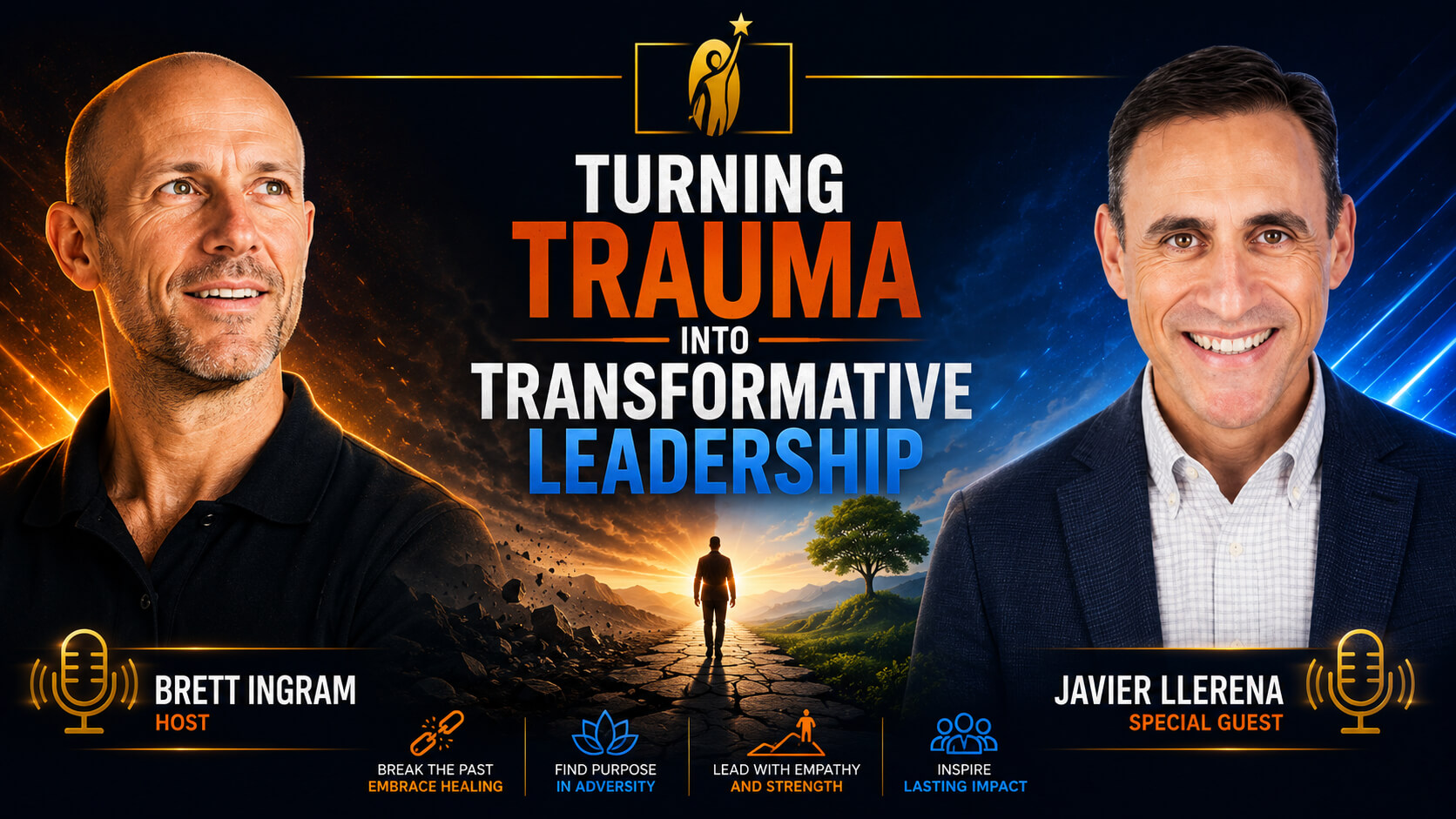
In this transformative episode of The optYOUmize Podcast, host Brett Ingram sits down with Javier Llerena, founder of Reinvent Consulting and leadership development coach, to explore how childhood trauma shapes authentic leadership. Javier shares his powerful journey from surviving a Catholic orphanage in Spain to becoming a sought-after leadership expert who helps entrepreneurs and teams unlock their full potential.
Discover why trauma survivors often make exceptional leaders, how self-awareness drives business success, and why conflict isn't something to avoid—it's a catalyst for growth. Javier reveals his unconventional approach to team accountability, including why he'd push top performers out of his team after just one year and how starting meetings with "tell me something I don't want to hear" creates psychological safety.
Whether you're a solopreneur working alone or leading large teams, this episode delivers actionable insights on building authentic connections, measuring leadership impact beyond numbers, and why loving yourself might be the most important business strategy you'll ever implement.
Perfect for entrepreneurs, business owners, and anyone looking to develop empathetic leadership skills that drive real results.
Timestamped Chapter List :
[0:00] Introduction & Welcome
[1:13] Javier's Background: From Spain to America
[2:27] Childhood Trauma & The Orphanage Years
[5:03] The Healing Journey Begins
[8:40] Hidden Pain: The Pleaser Personality
[10:03] Transition to Leadership
[15:17] Leadership for Solopreneurs
[19:57] Defining True Leadership
[23:19] Balancing Accountability with Empathy
[28:13] The "Tell Me Something I Don't Want to Hear" Strategy
[33:50] Measuring Leadership Beyond Numbers
[34:20] Leadership Lessons: The Importance of Relationship Building
[34:13] The Three-Part Leadership Framework
[40:08] Working with Leaders and Teams
[42:33] Final Wisdom: Love Yourself, Listen to Yourself
[43:33] Closing & How to Connect
Key Takeaways:
Episode Transcript:
Empowering Leadership with Javier Llerena: How Trauma Survivors Build Authentic Leadership
Introduction
This is the optYOUmize Podcast, the show that helps entrepreneurs build their dream business and dream life. Today we're talking with Javier Llerena, founder of Reinvent Consulting, leadership development coach, podcast host, and anti-human trafficking advocate.
The Big Question: How are entrepreneurs like us who have too much to do in too little time able to build both the business and the life of our dreams? That's the question. And on this podcast, we'll explore the journey to the answer.
My name is Brett Ingram, entrepreneur and award-winning product creator. I chose to build a business and have time for a personal life, and I want to help you do the same. Welcome to Optimize.
I'm super excited about this episode because I really believe that leadership development is such an important part of being an entrepreneur.
Javier's Journey: From Childhood Trauma to Leadership Excellence
Brett: Welcome, Javier. Thanks for joining us.
Javier: Thank you for having me here. It's a pleasure.
Brett: You have some fascinating stories. I have to start with your background—you immigrated from Spain to America in 1984 and faced significant childhood trauma. Can you share more about that?
Javier: Absolutely. I migrated in 1984 during the LA Olympics. One of my biggest surprises when I came to America was that Americans had toothpaste with two colors! Back in Spain, there was only white. When I came to America, I thought, "Oh my goodness, you have toothpaste with two colors—that's amazing!"
Going back to your question about childhood trauma: my mom passed away two years after giving birth to me from pancreatic cancer. I never had a picture with her because she was so ill that she refused to take any photos holding her firstborn. So I grew up without a mom.
My dad passed away when I was 12, which is why I came to America. But during that time, I was in an orphanage for four and a half years. That created a lot of trauma for me—being in a Catholic orphanage where abuse was very open: psychological, sexual, verbal—all types of abuse.
I came to America at 12 and a half years old. Now that I'm a trauma survivor, I realize that unless you're aware of the trauma you have, you're going to go through life without really noticing there's something going on—without the healing process.
In my forties, I almost got divorced. That was a wake-up moment for me to realize I'd been living with a lot of unhealed trauma. I tell people going through trauma to understand that there is a strength component to it. Trauma survivors are resilient—they have cognitive agility and can endure many obstacles in life.
The Psychology Behind Leadership: Understanding the "Pleaser" Personality
Brett: That's tremendous that you came through that and became stronger. It's super important to resolve these things because unresolved trauma impacts other elements of your life and will constantly creep up on you. So what inspired you professionally to go into leadership development?
Javier: Great question. Now that I reflect as a trauma survivor, I realize you're always looking for acceptance. One of the saboteurs that people who deal with trauma develop is the "pleaser" personality. We love to please because we want acceptance, recognition, love, and belonging.
We become very extroverted. That's why it's so easy for me to jump into conversations, ask questions, challenge people—not to be the center of attention, but to be noticeable in conversations and groups.
When you ask why I decided to go into leadership, it's because I was looking for that recognition and belonging. I dealt with so much rejection in my childhood that my subconscious was searching for acceptance.
I started my career in sales. I always wanted to be noticeable. To be noticeable, you either become an overachiever so people notice, or you contribute to conversations and help others excel their goals because you want to be part of the tribe.
When I look back, that drive really led me to leadership. Your hardships are perhaps a gift—this one gave me the ability to be a leader for others.
Brett: That's really powerful. What struck me is that people harboring pain sometimes reach out externally, which is why we don't recognize they're struggling. Externally, they seem happy-go-lucky and gregarious.
We generally associate people who are hurting with those who are withdrawn, but that's not always the case. You don't always know what's going on with somebody based on how they're acting around you.
Javier: Absolutely. The lesson is that we're all battling our own demons. We need to be respectful of how individuals navigate through life. Rule number one: nobody does anything toward anybody—they're just dealing with their own stuff.
They manifest it in different ways. For me, it's this extroverted pleaser personality. But it's a double-edged sword. If I become very close to somebody and that person doesn't accept or recognize me, the pain is unbearable. That's where anger and frustration come out, and that's when you realize you're dealing with trauma.
Rejection is hard. I always tell my daughters: make eye contact with homeless people because the worst thing we can do is not realize there's a human being in front of us.
Leadership for Solopreneurs: Why Self-Awareness in Business Matters
Brett: From an entrepreneurial standpoint, everyone understands why leadership skills matter when you have teams. But what about solopreneurs and business owners with no staff? Is leadership important for them?
Javier: Absolutely. You need to look yourself in the mirror. You are your worst enemy. You need to establish discipline for yourself, but first you need the healing process. You need to identify what habits or beliefs you need to let go of to become the solopreneur mindset you want to cultivate.
A lot of people implement time management and processes without realizing their engine hasn't had a tune-up yet. You need to examine yourself:
What limited beliefs do you have?
Why are you having a hard time envisioning success?
Are you too hard on yourself?
Do you forgive yourself?
Do you have self-compassion for things you've done in the past?
I have no regrets because everything comes at the right time. If I'm doing something now, it's for a reason. If I haven't done it in the past, that's okay.
You need that process of self-inquiry and self-exploration—what I call the rebirth or transformation. That means letting go of relationships, habits, possessions. So many things we need to release to have the discipline to move forward.
A key component of solo entrepreneurship: you are not by yourself. Even though you might work alone or have a virtual assistant or contractors, there are other solopreneurs you can collaborate with for support.
Brett: That's very true. I love your focus on the self-awareness in business piece. To be effective with other people, we have to be effective with ourselves. How can we understand others if we aren't willing to look at ourselves?
In today's day and age, self-compassion has become difficult because social media makes everyone appear more successful, happier, with more friends. I think back to my college days—there was a party every night, and you had to pick which nights to attend versus work.
Back then, we didn't have cell phones or social media. If you weren't at the party, you didn't know what was happening. Now you look at your phone and see real-time photos of everything you're missing. It makes it difficult to not feel like you're missing out.
We tend to be hard on ourselves through the lens of success and entrepreneurship because everywhere you look, someone's doing it better, easier, living a better life. We think, "Why am I not at that level?"
But everybody comes with different skill sets and desires. Not everybody's goals are the same. It's important to understand ourselves so we can help other people as well. These concepts are closely tied to success and leadership.
Defining Authentic Leadership in the Workplace
Brett: The word "leadership" gets thrown around a lot. How do you define it in the context of business?
Javier: For me, authentic leadership coaching is about someone who serves unconditionally to others and brings out the potential in individuals in an artistic way. They help people become aware of their potential.
True leadership is when someone has faith in you, works with you, doesn't tell you what to do, but opens your eyes to the possibilities of what you can do.
When I was in corporate, I shared this principle: I will never keep you more than a year if you're doing 110% quota. I'd say, "You need to navigate to other departments, other opportunities. You're going to get very comfortable here and gain weight. I don't want you to become lazy. I want you to push yourself."
People would say, "I love working with you," and I'd respond, "You're already at my level. You need other mentors, higher mentors." You always need to recycle mentors.
That's leadership—really pushing individuals to the next step because I don't think any of us are aware of our full human potential. We might have moments where we think, "I can do this," but we're not there all the time. Just bringing that glimpse to individuals—that's pure leadership.
It's not a two-way street. I'm not looking for recognition. When you get an employee of the year award, I'm not looking for recognition as your manager. I'm doing it unconditionally because I believe in it. When you do that, imagine—we're building other leaders who inspire other leaders. The momentum picks up and creates tremendous organizational growth.
Brett: It shows real strength of character to look at people through the lens of what's best for them. I've worked in organizations with great leadership and weak leadership. Weak leaders always try to hold people back because they feel threatened by anyone with abilities beyond theirs.
John Maxwell calls it "the law of the lid." If you're working for someone who's a six and you're an eight, you'll outgrow the place fast because they won't help you grow.
You need to be somewhere they say, "Stand on my shoulders. See what it looks like up there." That's a sign of great leadership. You know you're in the presence of a great leader when they inspire you to do more than you thought you were capable of—when they get the best out of you and push you toward your potential.
Balancing Team Accountability with Empathy
Brett: As a leader, I've run sizable teams. One tough thing leaders struggle with is holding people accountable. Not all leadership is champagne and roses—sometimes we have to correct behaviors or improve performance. How can leaders balance assertiveness and empathy?
Javier: Great question. I'm a big fan of conflict resolution leadership. Conflict is a sign of possibilities, opportunities, and growth. As leaders, we'll always have conflict, and that's a great sign for open dialogue.
When you have conflict with someone you're leading, perhaps communication wasn't clear. We need clear communication and clarity on what people are responsible and accountable for, and what impact they're making.
When I was in corporate, people would CC me in emails asking, "What do you think?" I'd say, "Don't give me a problem asking what I think. Propose a couple different solutions first." Imagine 136 people all CCing me asking what I think—I don't have the brain power!
I made it clear: come up with solutions, then come to me. We'll brainstorm and make a decision together. You empower them but maintain open communication.
If there's no conflict, something's wrong. Either people are being silent, not performing at their best, just doing what's needed and checking out at 5 PM, or they're afraid of you. I never wanted that.
I always started staff meetings with: "Tell me something I don't want to hear."
Brett: I love that!
Javier: People would ask, "What do you mean?" I'd say, "Tell me something I don't want to hear, and don't worry—nothing's going to happen."
People would say, "Javier, I really dislike you calling me at 11 PM from the airport checking on things when I'm with my family." I'd respond, "Great, that makes sense." I'd make note of those things and maintain open communication.
My behavior wasn't 100% perfect. We all do things we don't notice that bother others. Knowing that opened the communication channel and allowed me to hold them accountable as well.
Don't think conflict is a problem—conflict is an opportunity. Embrace it. It's an obstacle in the road. Let's see how we can be more effective communicators, implement different processes, and get to know each other better.
The Power of Conflict in Building Trust
Brett: That's a fantastic approach. A number of things you said strike a chord. Even in personal life, there are people you didn't get along with—you butted heads and thought you'd never be friends. Then you have a blowout together and end up becoming really good friends.
Going through conflict together and resolving it bonds you in a way that creates trust that can't exist if everything's always sunny and you're avoiding difficult conversations.
As a leader, you can't recognize holes in the ship if people are afraid to tell you. If you fire the messenger every time, people will retreat, protect themselves, and avoid anything that causes problems because they know their head will be on the block.
Starting meetings with "tell me something I don't want to hear" conditions your team to understand they won't get in trouble. It's a catalyst for growth.
The other thing you said is powerful: requiring people to bring solutions, not just problems. This develops their critical thinking and problem-solving skills while lightening your load.
I'm guilty of this myself. I had a brick-and-mortar business when I was younger with seven employees. If I was out of the office and there were hiccups, they didn't know how to navigate anything. I was frustrated thinking, "Why don't these people know how to do anything?"
Years later, I reflected and realized it was my mistake. I didn't give them permission or teach them to develop problem-solving skills. Every time there was an issue, they'd come to my office asking what to do, and I'd answer. I needed to treat them differently so they felt more empowered and could run things without me.
Leadership Lessons: The Quad Graphics Innovation Story
One leadership example I've always been fascinated by: the company Quad Graphics. Tom Peters, the legendary management consultant, did a piece on them. They do graphic design work, and the founder wanted to foster innovation.
He not only rewarded people for taking risks and making mistakes, but every time they created a new innovation, he sold it to competitors. His reasoning: if we're always giving away our advantage, we're generating revenue and rewarding our team. But more importantly, you have to constantly innovate.
The minute you get complacent and sit on an advantage, you lose it. He always reinforced that idea. What a fascinating way to run a business! It takes guts but shows tremendous faith and confidence in your people.
Measuring Leadership Impact Beyond Numbers
Brett: Sometimes leadership roles aren't numbers-driven. In sales cultures, everything is quantifiable—you can easily measure success. But how do you measure success of your leadership and empowerment efforts in roles without quantifiable metrics?
Javier: Great question. I come from a sales background where numbers defined performance. But I measured my leadership differently: by how many individuals were following their career path.
Performance reviews are biased and employer-centric instead of employee-centric. My reviews focused on career path mentoring. I'd ask, "Do you really want to be an inside sales manager for the rest of your life for 3-5 years? You're not thinking hard enough."
I'd make them think outside the box about what's next and what opportunities they see within the company. I had sales team members doing what I call internal internships in other departments.
Someone wanted product marketing? I'd say, "Talk to the product marketing person. Allocate 2-3 hours a week to learn and develop skills. When an opportunity comes, you'll be first interviewed."
I'd have conversations with HR saying, "I need to modify my performance review to add career path development and measure how they're growing in the organization." That's how I measured my leadership impact.
That's also how I started my own company. Individuals would come to me saying, "Javier, you're not the Chief Revenue Officer we want. We're looking for someone who can squeeze the best out of people." I'd think, "Really? Are they just numbers? Just machines you want to burn out?"
Brett: Putting someone's career path front and center shows you have their best interest at heart. When people know you have their back, they'll go to the ends of the earth to do a good job for you—even when you're not looking. That's a really powerful concept.
The Importance of Relationship Building in Business
Brett: I'll share a story from my brief sales career in staffing. My regional boss rode along to my appointments one day. We visited a woman's office, and the first thing I noticed was she had Mets photos. I'm a Red Sox fan, so I joked, "I can't do business with you—you're a Mets fan!"
She chuckled. I noticed family photos and commented on those. We talked a bit of business too. Afterward, my boss said, "You really gotta quit the chitchat. People aren't interested in that. All they care about is whether you have candidates."
That was the moment I knew that wasn't the right job for me. The only thing clients care about is the relationship. They get nine calls daily from other recruiters. The quality of our candidates isn't that different from competitors.
What's different? I broke up the monotony of her day with conversation about her family, vacations, sports, and things she liked. We had a good time. When I call next time, she'll answer. If all I do is jam candidates down her throat, she'll think, "Yeah, whatever."
That always stuck with me because of how stark it was.
The Three-Part Framework for Leadership Excellence
Brett: As a leader, what practices do you follow to continuously develop your leadership skills?
Javier: I use a three-part framework:
1. Optimize Your Energy
I ask leaders I coach: Where do you get your energy? Many say, "From my family. I love my family." I ask, "Really? If you go to bed at 2 AM and get up at 4 AM, will you have enough energy to love them the same way every day?"
They realize, "No, I need sleep." That's what I need to hear.
Consider:
Do you need more sleep?
Better nutrition?
To stop scrolling on your phone?
To let go of negative thinking?
Do you pray? Do mantras? Walking or sitting meditation?
Do you read? Get inspired?
Are you getting enough sunlight?
What elements provide the energy level you need to be optimal? Your health, mind, and spirit need to be optimal.
My career was in the '90s—back then it was "Who needs eight hours of sleep? Four is enough!" It was the burnout era. There was no Red Bull, just dripping coffee.
Optimizing your energy is number one. When you're at the top, you perform better, make better decisions, and feel much better.
2. Align with Your Purpose
What is your purpose? Why do you do what you do? When you align with your work's purpose, it's a breeze. Yes, there will be hard moments, but that's part of the purpose.
3. Love What You Do
Work on loving what you do and doing what you do with love. Imagine if I'm facilitating a workshop and don't love it—people sense it immediately. You won't have that energy.
You've got to love what you do. Enjoy it unconditionally—get excited like a kid in a candy store. These three things are key for success in life.
Brett: Those are all super important. I've had days where I grinded on just a few hours of sleep. Can I get work done? Sure. Am I as effective? No way. My mind thinks differently, my energy level's different, my optimism is different—everything changes with sleep, nutrition, and workouts. You have more to give when the tank isn't on empty.
The purpose thing is so important. Over my 17 years as an entrepreneur working with other entrepreneurs in startup phases, I always tell them: Don't chase the money.
If you're getting into business, starting a podcast, or a blog because you think there's money there, that's the wrong reason. There will be difficulties and challenges. If you're only doing it for money, you won't force yourself to keep going. If you love it, you'll find ways through obstacles.
I was in a job I liked well enough—I was good at it, not elite, but good. I respected my boss. One day she came in brimming with joy about a candidate and situation. I realized in that moment: I would never have her level of enthusiasm about this work.
I knew it was a pit stop for me, not my career. You can't compete with somebody who loves what they do—it oozes from their pores. They wake up bright-eyed and bushy-tailed, ready to rock. If you need three Red Bulls to get moving, you have no chance long-term.
I love that alignment with passion. It's what I've told my kids: "Don't worry about the money. Follow your passion. Find a way to make money in the passion. If you're at the top of your field—any field—you're going to be successful."
Working with Leaders and Teams: Creating Psychological Safety in the Workplace
Brett: As a leadership development coach, can you describe what you do to help leaders and teams?
Javier: I work with leaders individually using a coaching approach. We do an assessment because many leaders come saying, "I want to develop my communication skills." But when we dig deeper and peel the onion, we realize it's not communication—it's something else.
I also work with teams. I do customized workshops to bring teams together with their leader. In a short time, we get what they're looking for and bring what's very effective for teams: psychological safety in the workplace.
We do connection workshops where people say, "I worked with this individual for 10 years, and thanks to this workshop, I got to know them in 15 minutes." That's powerful.
It's important to bring someone from outside, not internal, because we're not biased. We do the work for both the team and the leader.
Brett: Even reviewing marketing, sometimes knowing the business too well is a detriment. It's hard to be objective or see with a clear eye when you're too close.
Final Wisdom: The Foundation of Entrepreneurial Success
Brett: Where can people find your services and connect with you?
Javier: The best way is LinkedIn—Javier Llerena. I have great content there. From there, I'd love to have a conversation and see how I can be of value to your life and your teams.
Brett: One last question I love asking for everyone's unique perspective: What's your number one tip for success as a business owner or entrepreneur?
Javier: This came to me yesterday while meditating—two words: "I love you. I'm listening."
Love yourself 100% and listen to yourself 100%. If you follow that, you're going to be successful in life.
Brett: That's really great advice, and it's not advice I hear often. It's important to hear someone who does this for a living—who studies and develops leaders—say that. It carries a lot of weight and is super important.
Thank you so much, Javier, for sharing all your insights and great tips with us.
Visit Reinvent Consulting to find out more about Javier and how he can help you become a better leader. You can also find him on LinkedIn.
Thanks for tuning in, everybody. As always, remember: no matter what you want from your business and your life, don't compromise—optYOUmize.
Be sure to subscribe so you get every episode and share it with a friend.
Until next time, remember: no matter what you want for your business and your life, don't compromise. Optimize.
FAQ :