Why Do I Avoid Looking at My Bank Account?
~20 min | November 2, 2026
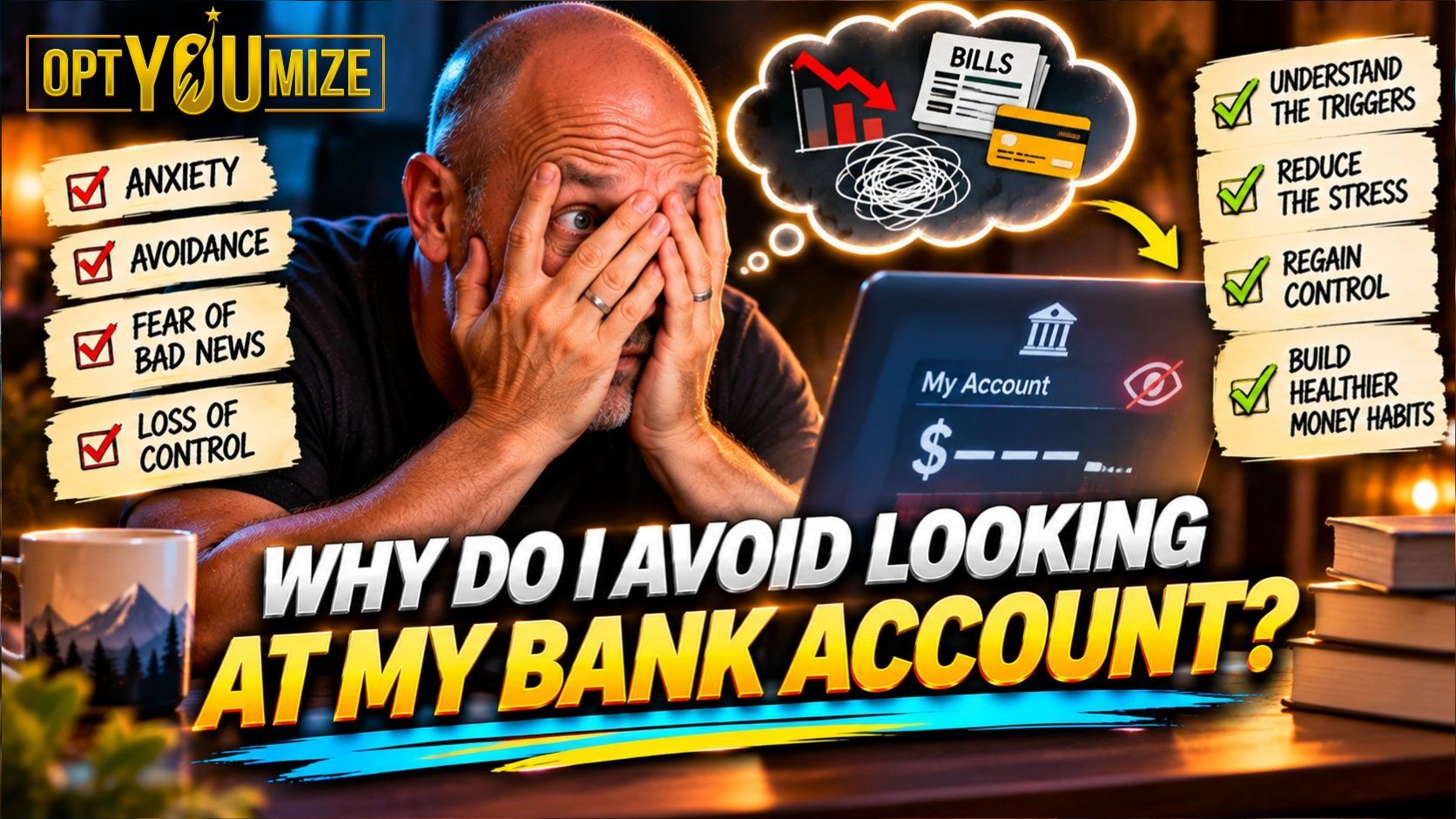
You avoid looking at your bank account because you're not avoiding the number, you're avoiding the feeling it produces, and for many people that feeling is shame. Somewhere along the way the balance stopped being information about your circumstances and became a grade on your worth. In this solo episode, Brett Ingram explains the ostrich effect, why "just check it every day" backfires, and a four-shift approach to looking without a verdict.
What You'll Learn in This Episode
- Why closing the banking app before the balance loads is your mind being efficient, not irrational, and how short-term relief trains the habit
- What a Vanguard study of more than a million investors reveals about the ostrich effect, and why real ostriches are blameless
- Why the feeling underneath financial avoidance is often shame, not fear of the number itself
- Why "just check it every day" asks you to wade deeper into the cold ocean without changing the feeling
- How money scripts, the unconscious beliefs about money you absorbed young, make looking feel shameful
- The reframe: you're avoiding a verdict, not a number, and your balance is a fact about your circumstances, not your worth
- The four shifts of looking without a verdict, plus the honest glance, a ten-minute practice to look at one number and change nothing
Episode Timestamps
[00:00]The envelope on the counter[00:50]Introduction[01:10]Why we can look at everything except the balance[01:55]What financial avoidance looks like (and how common it is)[03:50]The ostrich effect and the Vanguard study[05:10]Why avoiding works in the short term[05:50]The feeling underneath: shame, not fear[06:30]Why "just check it every day" backfires[07:20]Why willpower is the wrong tool[08:15]The reframe: avoiding a verdict, not a number[08:40]Money scripts and money avoidance[09:50]Your balance is a fact about circumstances, not worth[11:45]Looking without a verdict: the four shifts[14:50]The honest glance practice[16:40]What if the number is genuinely bad?[17:50]Scarlett O'Hara and the cost of tomorrow[18:30]Key takeaways: the number was never a fact about you
Episode Summary
When's the last time you opened your banking app, watched the little spinner, and closed it before the number appeared? Brett Ingram opens the episode with that flinch, and with a plain message for anyone who knows it: you're not lazy, you're not bad with money, and you're not the only competent adult quietly doing this. The avoiding, he argues, isn't the real problem. It's a solution to a problem we almost never name out loud.
He starts by describing what financial avoidance actually looks like, because precision is where relief starts. It usually isn't dramatic. It's the balance you could guess within fifty dollars but won't confirm, the statement you mean to get to, the way you can pay for things all day with a card and never see the total. You're interacting with money constantly. You're just not looking. And it's common: in one 2025 survey of two thousand U.S. adults, forty-four percent said they had avoided checking a financial account in the past year because it felt too stressful. Checking, not fixing. Just looking.
Then comes the research. Economists call this the ostrich effect, the tendency to avoid financial information when we expect bad news. Researchers Nachum Sicherman, George Loewenstein, and Duane Seppi, working with Vanguard data, tracked more than a million investors across over 850 million observations of people logging in to check their accounts. After a down day in the market, logins dropped by about nine and a half percent. These are people who chose to put money in the market and watch it, and even they quietly turned away when the news might sting. Real ostriches, Brett notes, don't bury their heads. They're turning their eggs. The ostriches are fine. It's us he's worried about. Avoidance pays off immediately, because the dread vanishes the moment you close the app, while the cost is invisible and deferred. Your brain made an understandable trade. It's just a bad long-term one.
That points to the question nobody asks: what is the feeling? Fear says the number might be bad. Shame says that would mean something bad about me. This is where standard advice goes wrong. Download the app, turn on alerts, check every morning: all of it treats avoidance as an information or willpower problem. But if tools were the obstacle, you'd have solved this already. Prescribing daily exposure without changing the feeling is like asking someone to wade further into a cold ocean each day and wondering why they keep turning back. You can't white-knuckle your way out of a feeling, because dread has more stamina than willpower.
The reframe the episode turns on: you're not avoiding a number, you're avoiding a verdict. The balance became a scorecard, a monthly grade on whether you're responsible, successful, grown up, enough. Brett draws on Brad Klontz's idea of money scripts, the mostly unconscious beliefs about money we absorb before we're old enough to question them. One of those scripts, money avoidance, holds that money is somehow bad or that you don't deserve it, so looking at your account stirs up fear, anxiety, even disgust. The same 2025 survey found thirty-five percent of people said their finances negatively affect their sense of self-worth. Their worth, not their plans. Brett's correction: your account balance is a fact about your circumstances, shaped by income, costs, timing, luck, and history. It's not a fact about your worth. Those two things got welded together, and the work is unwelding them. This is the heart of money as a tool for a good life, not a scoreboard.
From there he offers four loose shifts, a way of looking without a verdict. First, separate looking from fixing: give yourself radical permission to see the number and do nothing about it. Second, change the conditions: pick a contained window, a timer, a coffee, a specific chair, maybe a trusted person in the room. Third, change the question from "How bad is it?" to "What's actually true right now?" so you're a reporter, not a judge. Fourth, name the feeling before the number: "I'm about to look, and I notice I feel dread." You can feel the dread and read the number. Both can be in the room. As Brett puts it, generals don't feel ashamed of the map.
The practice he leaves you with is the honest glance, deliberately small. Once this week, pick the least scary account, set a ten-minute timer, name the feeling, and ask only what's true. Write down one or two plain facts, change nothing, make no plan, and close it. If that feels like too much, look for sixty seconds. He's equally direct about the hard cases: if what you find is real debt or a real shortfall, the glance isn't meant to minimize it. If it's bad, it was already bad before you looked, and you were carrying it without the facts, the heaviest way to carry anything. Avoidance doesn't keep the bad news away. It keeps the options away. You can't choose what you refuse to look at.
He closes with the thought to hold this week: the number is a fact about your situation. It was never a fact about you.
Resources Mentioned
- The ostrich effect — the tendency to avoid financial information when expecting bad news
- Sicherman, Loewenstein, and Seppi (with Vanguard data) — the study of more than a million investors whose logins dropped after down market days
- Brad Klontz — money scripts research, including the "money avoidance" script
- A 2025 survey of 2,000 U.S. adults — 44% avoided checking a financial account; 35% said finances hurt their sense of self-worth
- Gone with the Wind — Scarlett O'Hara's "I'll think about it tomorrow" as the classic avoidance line
- Looking without a verdict — Brett's four shifts: separate looking from fixing, change the conditions, change the question, name the feeling before the number
- The honest glance — Brett's ten-minute, once-this-week practice
Frequently Asked Questions
Why do I avoid looking at my bank account? Your brain has learned that not looking makes a painful feeling stop. The relief of closing the app is real, and that relief trains the habit. For many people the feeling underneath is shame: the balance has become a grade on their worth instead of a piece of information about their circumstances.
What is the ostrich effect? It's the tendency to avoid financial information when you expect bad news. In a study using Vanguard data on more than a million investors, account logins dropped by about nine and a half percent after a down day in the market. Even people who chose to invest turn away at the moment the news might sting.
Is avoiding my finances a sign I'm bad with money? No. Financial avoidance is common and doesn't measure your competence or character. In one 2025 survey of 2,000 U.S. adults, 44% said they had avoided checking a financial account in the past year because it felt too stressful. It's a human nervous system pattern, not a discipline defect.
Why doesn't "just check it every day" work? Because the obstacle is the feeling, not a lack of information or tools. Daily checking means more exposure to the thing that produces the painful feeling, with no change to the feeling itself. Willpower can carry you for a day or two, then the dread wins.
What are money scripts? Money scripts are the mostly unconscious beliefs about money we absorb early, often in childhood. Brad Klontz and colleagues describe one called money avoidance: a quiet belief that money is bad or that you don't deserve it. If that script is running in the background, looking at your account can feel like looking at something shameful.
How do I stop avoiding my bank account? Make looking safe before you try to make it a habit. Separate looking from fixing, set a ten-minute timer, name the feeling out loud, and ask one question: what's actually true right now? Write down a fact or two, change nothing, and close it. If ten minutes is too much, try sixty seconds.
What if I look and the number is genuinely bad? If it's bad, it was already bad before you looked. Avoidance doesn't keep the bad news away, it keeps your options away. Every choice that could help, a call, a plan, a conversation, a small change, lives on the other side of looking.
Keep Exploring
If this episode resonated, these are worth your time:
- Why Is Talking About Money So Hard? — the money taboo and why we won't say the number out loud
- What Is a Money Script and How to Change It — the inherited beliefs that shape how looking at money feels
- Why Do I Still Feel Broke When I Make Good Money? — another case where the story about the number matters more than the number
Enjoyed This Episode?
The best way to support optYOUmize is to subscribe and leave a review — it takes about two minutes and makes a real difference in helping more people find the show.
Apple Podcasts · Spotify · Amazon Music · YouTube