Is Boredom Good for You? What the Research Says
By Brett Ingram | Last updated October 28, 2026 | 6 minute read
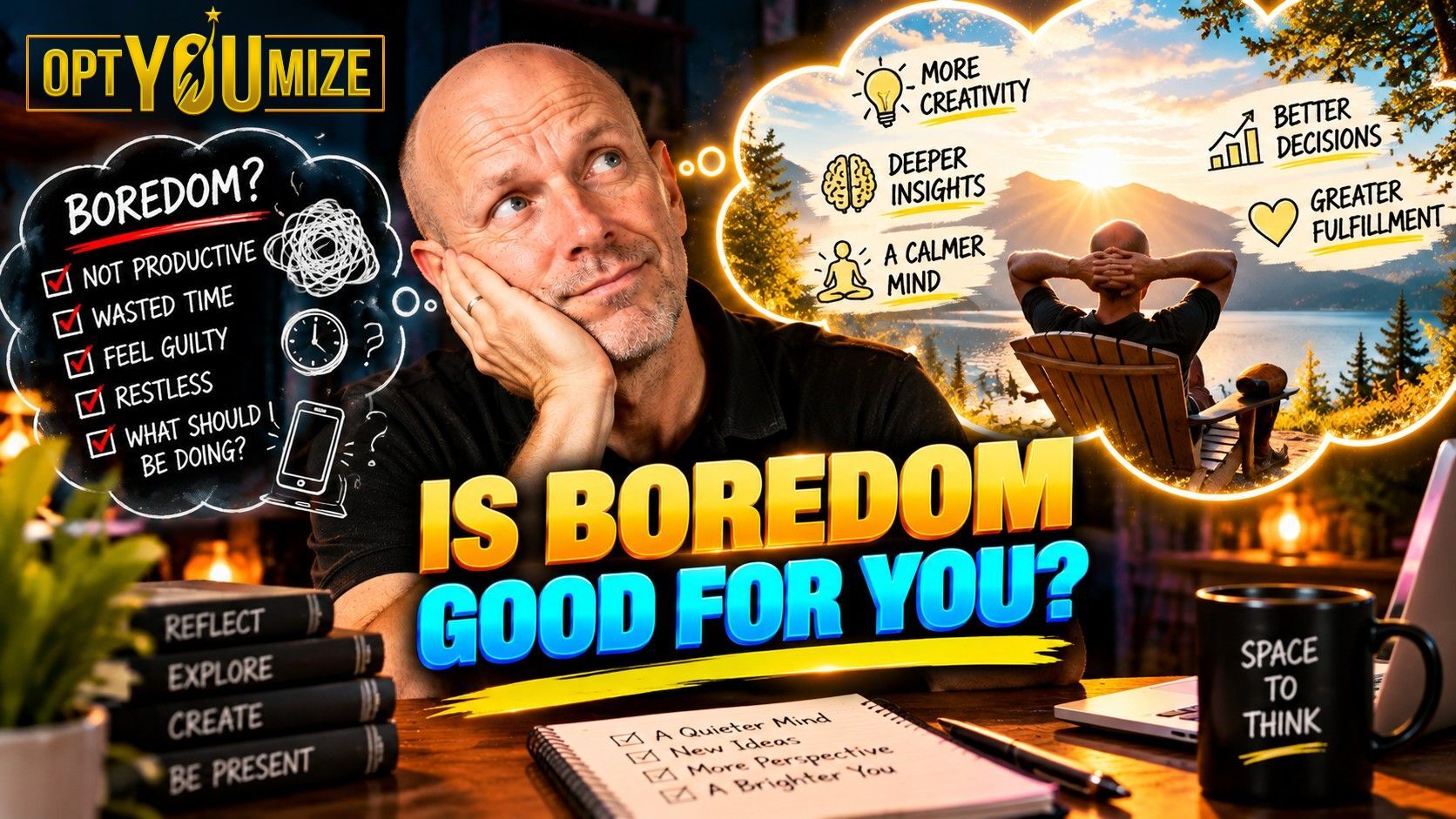
In small, occasional doses, boredom may be good for you. A 2014 study found that people who first did a dull task went on to score higher on a creativity task than people who hadn't, and mind-wandering is a plausible reason why. But the research is modest, and boredom isn't a miracle cure. Chronic, stuck-in-it boredom is a different thing and can wear you down. The useful question isn't "should I be bored?" It's "have I left any room for my mind to wander at all?"
The Simple Answer
Occasional boredom is a signal, not a defect. It tells you your attention has nothing to hold on to, and what happens next (daydreaming, a half-formed idea, a decision you've been avoiding) can be useful. The evidence for creativity benefits is promising but limited. The evidence that most of us now avoid boredom at nearly any cost is a lot stronger, and a little funnier.
What Happened When Researchers Left People Alone With Their Thoughts?
Here's the study I think about most. In 2014, Timothy Wilson and colleagues published "Just think: The challenges of the disengaged mind" in Science. Across 11 studies, participants were asked to spend 6 to 15 minutes alone in a room with nothing to do but think. No phone, no reading material, no pen.
Most didn't enjoy it. Their minds wandered and they found it hard to concentrate. People who did something external, like reading or listening to music, enjoyed the time more.
Then came the part everyone remembers. In one study, participants had already sampled a mild electric shock and said they would pay to avoid getting another one. Left alone for 15 minutes with the button within reach, 12 of 18 men and 6 of 24 women gave themselves at least one shock.
A few honest caveats. That's one study out of eleven, the numbers are small, and the shock was mild. It doesn't prove that we hate thinking. It does suggest that the default setting for many of us is "do anything but this." The authors summed it up memorably: "The untutored mind does not like to be alone with itself."
If you've ever grabbed your phone while waiting for a microwave to count down thirty seconds, you're in good company.
Does Boredom Actually Make You More Creative?
Possibly, yes. In "Does Being Bored Make Us More Creative?" (Creativity Research Journal, 2014), Sandi Mann and Rebekah Cadman ran two studies, with 80 and 90 participants. People who did a boring activity first then went on to a creative task, and the researchers reported that the boring activities resulted in increased creativity. Boring reading seemed to help more than boring writing in some circumstances, such as convergent tasks.
The suggested explanation is daydreaming. When a task demands nothing from you, your mind goes looking for something to do, and that wandering may be where odd connections get made. The paper discusses daydreaming as a possible mediator rather than a confirmed mechanism, so treat that part as a plausible idea, not a settled fact.
Two modest studies don't make a law of nature. But they line up with something many people notice anyway: the shower idea, the long-drive idea, the "I'd stopped trying and then it came to me" idea.
Is All Boredom the Same?
No, and this matters. There's a big difference between a few unstructured minutes and a life where nothing engages you. The first is a gap. The second can be draining, and we've written about it in what boreout is and why being bored at work is so exhausting. If your boredom is constant, it may be telling you something about your work or your life, not inviting you to daydream.
| Occasional, unstructured boredom | Chronic boredom | |
|---|---|---|
| What it feels like | A gap, an itch, a restless pause | A flat, stuck, going-through-the-motions feeling |
| How long it lasts | Minutes | Weeks or months |
| What it may offer | Room for daydreaming and new ideas | A signal that something needs to change |
| Best response | Let it be, for a bit | Look at the cause |
The table is my plain-language summary, not a formal clinical distinction.
Why Is It So Hard to Be Bored Now?
I'd say it's mostly about availability. A generation ago, boredom was unavoidable: waiting rooms, bus stops, long car rides. Now there's always something within reach. That's an observation, not a measured finding, but it fits what the Wilson study suggests: given a choice, many of us will reach for any stimulation at all.
The cost isn't that we have fun. It's that the in-between moments, the ones where thoughts used to wander, get filled. Rest isn't only sleep or vacation, and unstructured downtime is one more kind we may be missing, which we get into in the seven types of rest you're not getting. And if you find your mind racing at the end of the workday, why you can't switch off after work is a good companion read.
How Do You Try Boredom on Purpose?
Here's a small experiment. These steps are my suggestions, not a clinical protocol.
- Pick one gap a day. The commute, the line at the grocery store, the ten minutes before a meeting.
- Leave the phone in your pocket. Not a rule forever. Just for this gap.
- Let your mind go where it goes. Don't try to meditate or brainstorm. Notice what drifts up.
- Keep a scrap of paper handy. If something useful shows up, write it down. If not, no harm done.
- Try it for a week. See whether anything changes, even if that's only noticing how often you reach for your phone.
You may find the first few days itchy. That's normal. The Wilson participants weren't thrilled either. If you want the opposite of drifting, deep absorption in something you care about has its own rewards, which we cover in what flow state is and how to get into it. A good life probably has room for both.
One note: if you find that quiet time stirs up anxious or painful thoughts rather than idle ones, that's worth taking seriously. A mental health professional can help. This post is general information, not medical or psychological advice.
Frequently Asked Questions
Is boredom good for you?
In small doses, it may be. Some research links brief boredom to increased creativity, possibly through daydreaming. Chronic boredom is different and can be a sign that something in your work or life needs attention.
Does boredom make you more creative?
One 2014 study of two groups (80 and 90 participants) found that boring tasks were followed by better performance on creative tasks. It's promising but limited, and it doesn't mean every bored moment leads to a breakthrough.
Why do I hate being alone with my thoughts?
You're not unusual. In a well-known 2014 study, most participants didn't enjoy 6 to 15 minutes of just thinking, and some chose to give themselves mild shocks instead. It may simply be out of practice. Starting with short stretches can help.
How much boredom do you need?
There's no research-backed number. A reasonable starting point is a few unplugged minutes a day, then seeing how it feels.
Where This Leaves You
Boredom doesn't need a productivity makeover. It needs some room. This week, pick one gap in your day and leave it empty, and see what shows up. For more on building days with space in them, explore our Time, Rhythm & Rest pillar.